
Lighting the Way: Your Complete Guide to Sustainable Illumination
Wise choices for lighting can save 75 cents per dollar spent on electricity, while protecting human health, wildlife, and starry skies

In today’s frenzied world, Americans rush in and out of rooms, leaving behind a trail of illumination, whether or not anyone actually needs the lights on. Our children live in homes that still have CFL light bulbs (compact fluorescent lamps) containing toxic mercury. Ninety-nine out of a hundred of us are living under night skies so bright from artificial light that we can’t see the Milky Way. Think of the amount of energy and money wasted and the risk of exposure to mercury poisoning. Fortunately, it doesn’t have to be this way.
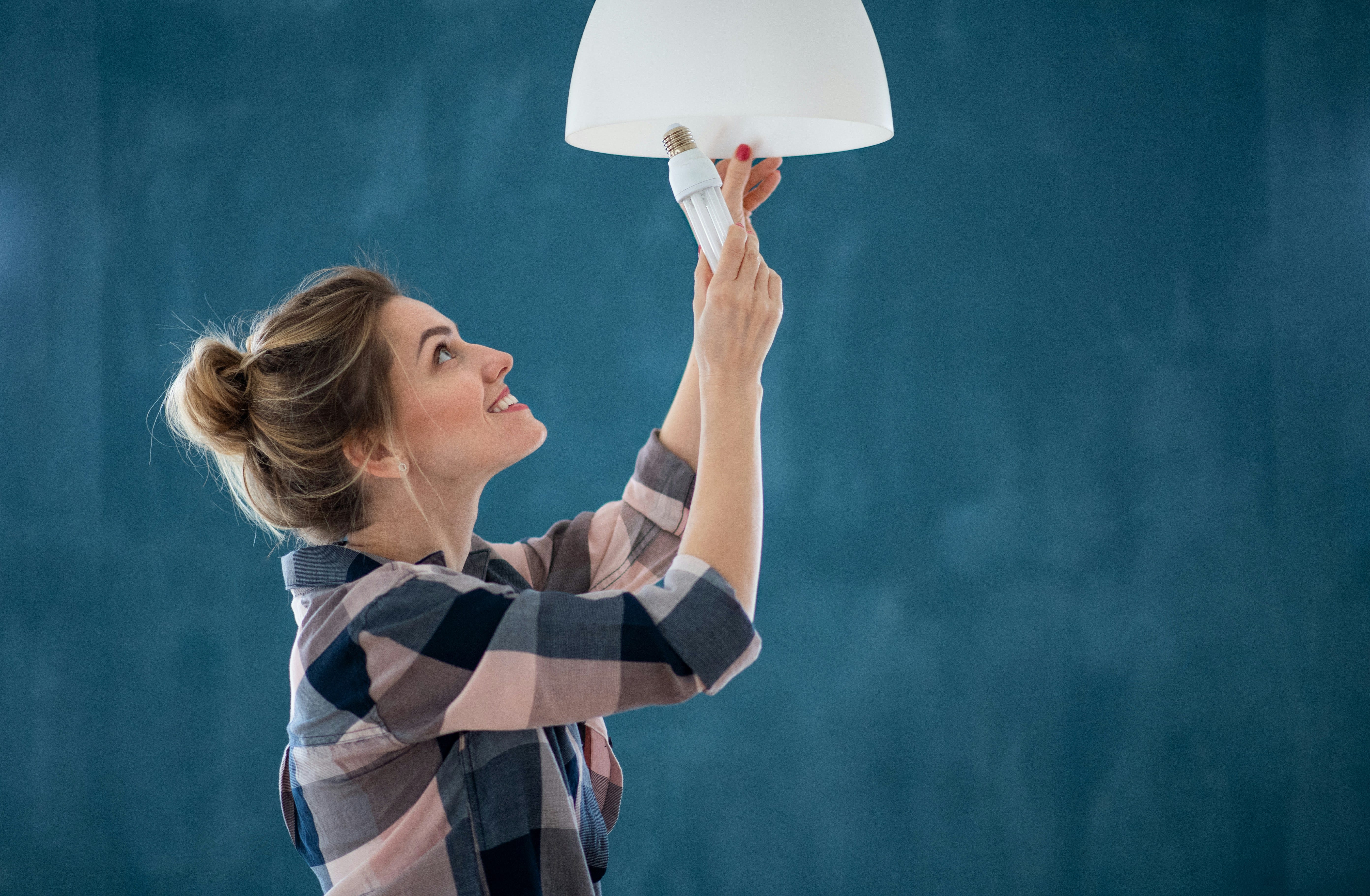
Technology has transformed lighting. We’ve moved from energy-guzzling incandescent bulbs that lasted barely a year to light-emitting diodes that meet the strict European Restriction on Hazardous Substances standard and can operate for 25 years on tiny electrical currents. You have the power to use technology wisely to light up your own home or organization in ways that prevent pollution and protect our environment. Whether you’re just learning about LEDs or ready to become a lighting efficiency expert, this guide offers practical next steps you can take today on the pathway to sustainable lighting.
Quick Start: Flip the Switch on Wasteful Habits
A simple step toward more sustainable lighting costs nothing—just mindfulness. No one intends to burden our public electrical grid and waste dozens of dollars annually on lights carelessly left on by mistake, yet instilling a consistent habit of care can be surprisingly tricky.
Embrace natural light. Before reaching for a light switch during daylight hours, ask yourself: “Do I really need this?” Open curtains and blinds to let sunlight illuminate your space. Set up a reading chair or workstation where there is sufficient daylight. Natural light is not only free—it’s also better for your circadian rhythms and mental health. A sunny window can replace many watts of artificial lighting.
Create an evening routine. Before bed, walk through your home and turn off all lights that don’t need to be on. Make this a mindful practice rather than a chore—celebrate the electricity you’re allowing to flow for better purposes, consider how much cleaner your air and water will be by preventing unnecessary pollution, and think about how you can spend the money you’re saving every time you turn off a light.
Mind one room. Choose a room where you forget to turn off the lights—perhaps a bathroom or basement. Make it your mission to turn off the light every single time you leave that space. Post a log sheet and a pencil near the switch with two columns: in and out. If the light was OFF when you entered the room, place a check in the in column. If it was ON, place an X in the in column. If you remember to turn off the light when you leave the room, place a check in the out column. Once turning the light off becomes an automatic habit (you have only checks on your log sheet), move your log sheet and pencil to another room.
These three steps alone can reduce your lighting energy use by 30% without spending a dime (and in fact, saving you many dimes!).
Level Up: Understanding the LED Revolution
If your home still uses incandescent or fluorescent light bulbs, you’re wasting money by heating your rooms with light fixtures. Those older technologies emit lots of heat and little light. Here’s how to tell which kind of light bulbs you have.
Fluorescent bulbs are thin tubes filled with hazardous mercury vapor. These tubes are either straight, circular, or twisty (as in a “compact fluorescent lamp” or CFL).
Incandescent or LED light bulbs are manufactured in the classic light bulb shape. Turn the light on and put the back of your hand near it (but don’t touch it–incandescent bulbs will burn you!). If it feels like a heat lamp, you’ve got an incandescent (“glowing hot”) bulb that you should replace immediately.
Replace your bulbs with LEDs. Go through your home or organization and make a list of all the light bulbs you own. Then replace them one by one with LEDs. You can throw away your incandescent light bulbs in your regular trash, but you cannot do that with fluorescent lighting. Because it contains mercury, a potent neurotoxin that causes brain damage, fluorescent lighting is not a safe product to have in any home or organization, and it cannot be disposed of safely in your regular garbage.
Fluorescent Lighting: A Hazardous Product Containing Toxic Mercury
If you have fluorescent lighting, get a box and label it “Household Hazardous Waste - Fluorescent Lamps.” Put all your fluorescent lighting in that box, trying your best not to break any of the lamps. Once you have all your dangerous fluorescent lighting in a box, take it to a hazardous waste disposal event (these are often organized by environmental groups or municipal governments) or a collection facility that can handle mercury.
What if you break a fluorescent lamp? Unfortunately, you have released a tiny bit of toxic mercury. This is why it is not safe to have fluorescent lighting in any home, business, school, or other building where people might come into contact with the mercury from a broken lamp.
Do your best to minimize the chance that this heavy metal gets into someone’s body. Some of the mercury that was contained in the fluorescent lamp will be on the pieces of broken glass of the lamp. Wear plastic gloves, use a roll of masking tape, painter’s tape or duct tape to pick up all the shards of glass. Put the balled up tape and the plastic gloves in a glass jar with a screw-top lid. Tape around the lid to keep as much mercury as you can in the jar rather than leaking out into your home. Place this glass jar in your household hazardous waste box.
Why did people buy fluorescent lighting containing toxic mercury? Before LED lighting was invented, fluorescent lighting was a reliable lighting technology that was somewhat more efficient than the even older incandescent technology. Now that more efficient LED lighting is available, keeping fluorescent lighting in your home or business is not a wise idea: you’re wasting energy and risking exposure to toxic mercury. LEDs do not contain any mercury and can be manufactured to meet the strict European Restriction on Hazardous Substances (RoHS) directive.
Learn to read lighting labels. The old way of shopping for light bulbs—by wattage—is obsolete. Watts measure energy consumption, not brightness. Lumens measure brightness.
Here’s a chart in case you need to replace any old-fashioned incandescent light bulbs
Replace a 40W incandescent with a 450 lumen LED
Replace a 60W incandescent with an 800 lumen LED
Replace a 75W incandescent with a 1,100 lumen LED
Replace a 100W incandescent with a 1,600 lumen LED
Choose the right “temperature”. LEDs come in different “temperatures” that correspond to shades of white. “Warm” white (2700-3000K) mimics traditional incandescent lighting and works well for living spaces and bedrooms. “Cool” white (5000-6500K) provides alertness-enhancing task lighting. Most people find lower K values more yellowish and soothing than higher K values, which are perceived as harsh and bluish.
Verify dimmer compatibility. Dimming works differently for LEDs than it does for other lighting technologies. Read the packaging to see if the LED is dimmable; some are explicitly not dimmable. For dimmable LEDs, the packaging should state which types of dimmers the LED driver can handle. If the dimmer and the driver don’t get along, the result is often a strobing effect or an LED that simply turns off instead of dimming.
Intermediate: Strategic Lighting Design for Efficiency
Many homeowners don’t realize that not every square inch of every room needs the exact same amount of light. Over-lighting (making areas uncomfortably or unnecessarily bright) wastes massive amounts of energy. By being strategic about light levels, you can dramatically improve livability and save money on your power bill each month.
Set ambient and task lighting levels. Ambient lighting provides general illumination for a room—think overhead fixtures. Task lighting provides focused, brighter light for specific activities like reading, cooking, or working. A mistake is cranking up ambient lighting for a whole room, when adding brighter task lighting is what really makes it easier to perform detailed work.
Simply by planning to use less power for ambient lighting and adding task lights where you need them, such as a reading lamp beside your chair, under-cabinet lighting in the kitchen, or a desk lamp in your office, you can reduce your lighting energy use by 40% while providing a more visually comfortable indoor environment.
Apply the principle of layered lighting. Energy-efficient and aesthetically pleasing rooms use three layers:
Ambient lighting: Low-level general illumination from ceiling fixtures or wall sconces
Task lighting: Focused light for specific activities
Accent lighting: Decorative lighting to highlight features or create a mood
By controlling these layers independently, you use only the light you need at any moment. Watching TV? Turn off overhead fixtures and use only accent lighting. Reading? Activate your task light without illuminating the entire room.
Right-size your bulbs. Many fixtures contain lamps (the technical term for a “light bulb”) far brighter than necessary. Buy a set of screw-in LEDs with a range of 450 to 1,600 lumens. Walk through your home and try different brightness levels in each fixture. Record the optimal lumen level for each fixture, then go shopping for exactly the right LED lamps rather than wasting energy to produce more light than you want.
Advanced: Intelligent Controls That Work For You
Once you’ve optimized your bulbs and lighting strategy, adding smart controls takes efficiency to the next level—automatically ensuring lights are only on when and where needed.
Install motion sensors. Occupancy sensors can reduce lighting energy use up to 90% depending on the space, with typical savings around 30%. The best candidates for energy-saving sensors include rooms you use briefly and are unlikely to notice if the lights are accidentally left on, such as bathrooms, closets and storage rooms, garages, basements, and laundry rooms.
Upgrade to modern dimmer switches. Here’s where understanding technology matters: rheostat dimmers (still sold in some stores) are wasteful relics from the last century—rather than saving energy, they simply force electricity through a small electric heater before sending it through your light bulb. You’re not reducing the flow of electricity, you’re just dialing up more heat and less light for every watt you send through the dimmer.
More modern switching dimmers interrupt the flow of electricity to your lights. This can actually save energy because the dimmer the light, the less electricity is flowing per second. Switching dimmers can cut energy use by 80% while extending lamp life.
When replacing dimmers, look for ones specifically designed for your LEDs. This will deliver genuine energy savings, eliminate buzzing and flickering, and work smoothly across the dimming range. If your current dimmer causes your LED bulbs to hum or flicker, that’s a sign it’s not compatible with the drivers in your LEDs.
Consider smart bulbs and switches. WiFi-enabled smart lighting allows you to schedule lights, control them remotely, and ensure they’re never left on when you’re away. They offer features like:
Automatic sunset/sunrise scheduling
Remote control via smartphone
Integration with home automation systems
Vacation mode for security
Energy monitoring to track consumption
For maximum efficiency, combine smart controls with occupancy sensing—lights that automatically activate when you enter and turn off when you leave, but that you can also control remotely or via schedule.
Responsible Disposal and Environmental Stewardship
True lighting sustainability extends beyond energy efficiency to include proper disposal of hazardous materials. We are repeating this warning about mercury in fluorescent lighting because it is so essential for your health and safety!
Properly recycle mercury-containing bulbs. Compact fluorescent lamps (CFLs) and fluorescent tubes contain milligrams of mercury—this heavy metal pollutes our environment and can poison people if it leaks out of a broken tube and gets into a human body. While hazardous CFLs are now obsolete thanks to superior LED technology, you may still have them in your home, church, or other organization. Never put any type of fluorescent lighting in regular trash.
Instead, take CFLs and fluorescent tubes to collection sites that are designed to handle mercury and other hazardous waste:
Major retailers like Home Depot, Lowe’s, and IKEA may accept your CFLs for free
Municipal household hazardous waste collection sites usually accept mercury-containing bulbs, such as fluorescent tubes
Some states (like Maine and Washington) require manufacturers to provide free recycling programs
If you still have the original packaging for your CFLs, those are a great way to store them in your box of household hazardous waste until you can drop them off at a collection site. If you break any fluorescent lamp, avoid vacuuming (which spreads the mercury vapor and contaminates your vacuum cleaner), carefully pick up pieces with tape, seal debris in a glass jar with a screw top, and dispose of it at a hazardous waste collection site that accepts broken lamps (not all sites do).
Transition completely to mercury-free LEDs. To keep yourself and your family safe while saving energy, immediately replace your CFLs with LEDs that meet the European Restriction on Hazardous Substances (RoHS) standards. LEDs are the safest and most efficient lighting technology you can buy.
Protecting Dark Skies: Lighting for Wildlife and Stars
Globally, four of five people on Earth now live under night light-polluted skies so bright that the Milky Way is invisible. This doesn’t just affect astronomers—excessive artificial light disrupts wildlife, affects human health by interfering with circadian rhythms, and wastes $2.2 billion annually, sending photons into space for no reason.
When you install outdoor lighting, consider these principles:
Use light only if needed: Many all-night security lights are installed to provide a sense of security. Check if cameras, locks, or fewer lights in better locations could serve that purpose more effectively and sustainably.
Target light where needed: Use fully shielded fixtures that direct light downward, not upward or sideways. Light escaping horizontally or toward the sky is light pollution.
Use appropriate brightness: Install only as much light as actually needed for the task.
Use controls: Pair outdoor lighting with motion sensors, timers, or smart controls so lights operate only when needed.
The Bigger Picture: Your Lighting Legacy
When you remove a CFL and install an LED in its place, you’re not just reducing your own electricity bill—you’re easing demand on our public power grid and preventing pollution. When you add motion sensors to a security light, you’re demonstrating to neighbors that you care about the environment and their ability to get a good night’s sleep. When you properly recycle hazardous products containing mercury, you’re preventing toxic contamination of water and soil. When you eliminate upward light, you’re protecting wildlife and preserving humanity’s ancient connection to the night sky.
Every light you optimize is a small victory for sustainability. You have the power to transform how your home lights up—start flipping switches today.
Our new book, Your Earth Share: Seven Pathways to Sustainable Living, is available for holiday giving! An inspiring, budget-friendly, accessible (102 pages) gift book for your friends and family interested in sustainability is available now! (And it’s a one-of-a-kind book, offering measurement tools to measure progress.) You can find a description and easy ordering on our website:
https://suspra.com/books/earthshare
References and Resources
LED Technology and Efficiency
U.S. Department of Energy: Lumens and the Lighting Facts Label - Official guide to understanding lumens vs watts
LED Lighting Supply: LED Statistics - Comprehensive LED efficiency data
U.S. Energy Information Administration: Lighting Energy Consumption - Residential and commercial lighting statistics
Motion Sensors and Lighting Controls
U.S. Department of Energy: Wireless Sensors for Lighting - Comprehensive guide to occupancy sensors
Arizona Public Service: Calculating Lighting Control Savings - Energy savings formulas and examples
MDPI: Motion Sensor Energy Savings Study - Peer-reviewed research on sensor effectiveness
Dimmer Switches and Controls
HowStuffWorks: How Dimmer Switches Work - Technical explanation of TRIAC vs rheostat dimmers
Energy Bot: Does Dimming Lights Save Energy? - Modern dimmer technology and savings
BOQI: LED Dimming Explained for Real Savings - Advanced dimmer compatibility and efficiency
CFL and Mercury Disposal
U.S. EPA: Recycling CFLs and Mercury Bulbs - Official disposal guidelines
Earth911: How to Recycle CFLs - Practical recycling information and locator
Energy Star: Recycle Compact Fluorescent Bulbs - Retailer take-back programs
Dark Sky Principles and Light Pollution
DarkSky International - Leading organization for light pollution reduction
DarkSky: Five Principles for Responsible Outdoor Lighting - Comprehensive outdoor lighting guidelines
National Geographic: Light Pollution - Environmental and health impacts
National Park Service: Light Pollution - Effects on natural areas and wildlife
Fairfax County: Dark Sky Lighting Guide - Practical implementation strategies
Lumens vs Watts Conversion
VOLT Lighting: Lumens to Watts Conversion Chart - Easy reference charts
Eartheasy: LED Comparison Charts - Cost-effectiveness comparisons
Enkonn Solar: Understanding Wattage vs Lumens - Technical explanation with examples